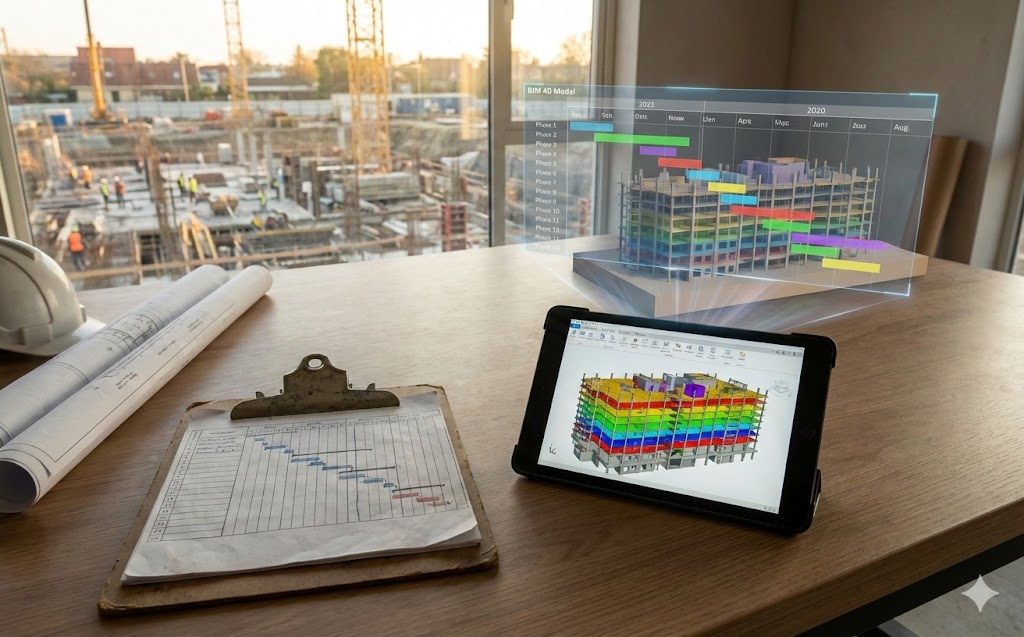


From the Gantt Chart to the 4D BIM Model

from gantt chart to bim 4d

Time planning is one of the most critical aspects of construction projects. Traditionally, the Gantt chart has been the primary tool used to organize and control construction activities. Today, with the incorporation of the BIM methodology, the 4D model emerges, integrating time directly into the three-dimensional model, allowing for a clearer and more efficient visualization of the construction process.

The Gantt Chart in Construction

The Gantt chart is a graphical representation of a project schedule, showing activities, their duration, and their sequence over time. It is widely used due to its simplicity and ease of understanding.

Advantages of the Gantt Chart

  • Easy to create and understand.
  • Clear visualization of the total project duration.
  • Widely used and accepted within the industry.

Limitations of the Gantt Chart

  • It does not allow visualization of the construction process in space.
  • Makes it difficult to detect conflicts between activities.
  • Limited integration with the project design.

Advantages of BIM 4D

With BIM 4D, the three-dimensional BIM model is linked to the construction schedule, adding time as the fourth dimension. This makes it possible to visually simulate how the project is built over time.

Components of the 4D Model

  • BIM 3D model (architecture, structure, and MEP systems).
  • Construction schedule.
  • Linking construction elements with scheduled activities.

From Gantt to BIM 4D: Transition Process

To develop a 4D model, it is essential to have a properly organized BIM model, structured by phases and construction elements. Services such as BIM services enable the creation of models suitable for this type of analysis.

Schedule Development

The schedule can be created using traditional tools, maintaining the logic of the Gantt chart, while considering its future integration with the BIM model from the very beginning.

Each scheduled activity is linked to specific model elements, generating a visual simulation of construction progress. This process is often guided by BIM consulting services, which help define the most effective implementation strategy.

Comparison Between Traditional Gantt and BIM 4D

  • The Gantt chart shows dates; BIM 4D shows the construction process.
  • BIM 4D facilitates early detection of errors.
  • Improves communication among project teams.

The use of BIM 4D allows for a better understanding of the project, reduces rework, and improves time control during construction. Many organizations choose BIM outsourcing solutions to efficiently implement this methodology.

In real-world projects, BIM 4D is used to simulate different construction scenarios, optimize activity sequencing, and anticipate issues before they occur on site. Specialized BIM firms, such as a BIM services company, typically lead these types of implementations.

Limitations of BIM 4D

  • Need for technical training.
  • Greater initial planning effort.
  • Coordination among different disciplines.

The transition from the Gantt chart to the BIM 4D model represents a significant advancement in construction planning. By integrating time into the three-dimensional model, decision-making is improved, errors are reduced, and the construction process is optimized—establishing BIM 4D as a key tool in modern construction. Contact Acero Estudio, we are a BIM services company specialized in international-level projects.

Guide for the Quality Audit of BIM Models in Projects

key factors in bim audit

When it comes to large-scale projects, the quality of BIM models becomes a critical factor that can determine the success or failure of the entire initiative. At Acero Estudio, as an company specialized in BIM and a comprehensive service provider for the AEC sector, we have developed an exhaustive methodology for BIM model quality auditing that we want to share in this definitive guide.

BIM auditing for large-scale projects

Large-scale projects involve multiple disciplines, numerous professionals, and a level of technical complexity that demands precision. An error in the BIM model can lead to costly delays, on-site conflicts, and even structural safety issues. Auditing is not a luxury, but a strategic necessity that ensures the integrity of the digital model before its physical implementation.

Our experience in surveying services and 3D laser scanning has taught us that precision in data capture is only the first step. True excellence is achieved when that data is integrated into coherent, complete, and reliable BIM models.

The 5 pillars of our BIM audit

1. Geometric integrity verification: We validate that all dimensions, shapes, and spatial relationships in the BIM model correspond exactly to the project’s real conditions or to the approved designs.

2. Parametric information validation: We audit that the parameters of each element—from technical specifications to manufacturing and maintenance data—are complete, consistent, and useful throughout all project phases.

3. Interoperability control: We verify that the model can be efficiently used by all stakeholders, from architects and engineers to contractors and facility managers, without any loss of information.

4. Clash detection analysis: We implement automated detection of interferences between systems that could generate costly issues during construction.

5. Compliance assessment: We ensure that the project complies with modeling standards, including local and international regulations, as well as the client’s specific requirements.

A lesser-known fact is that, according to industry data, projects that implement systematic BIM quality audits reduce requests for information (RFIs) during construction by an average of 40% and decrease costs associated with unexpected changes by approximately 25%.

Advanced technologies in our methodology

Our BIM consultancy incorporates artificial intelligence tools for predictive analysis of potential issues, specialized software for 4D clash detection (including the time dimension), and cloud-based collaborative platforms that enable real-time audits even with geographically distributed teams.

For projects that require exhaustive technical documentation, we complement our services with high-precision CAD outsourcing, ensuring that drawings and details derived from the BIM model maintain the same quality and consistency as the digital model.

The quality auditing of BIM models in large-scale projects goes beyond a simple technical review. It is a strategic process that:

  1. Protects the project investment by identifying issues before they materialize
  2. Optimizes construction processes through accurate models
  3. Facilitates collaboration across all disciplines
  4. Generates a valuable digital asset for future operations and maintenance
  5. Meets the highest standards of excellence

At Acero Estudio, we have refined this methodology through years of experience in BIM consultancy for complex projects, combining our expertise in BIM modeling to deliver a comprehensive solution that guarantees quality from the very first to the very last pixel of the digital model.

What Does the Price of a Topographic Survey Depend On?

what does the price of a topographic survey depends on

The price of a topographic survey is not a standard value, as each project presents different technical and operational conditions. Factors such as the type of study, land size, technology used, and requested deliverables directly influence the final cost.

For this reason, a professional topography company always carries out a prior evaluation before defining a budget.

Type of survey and level of precision

The cost varies depending on the type of survey required: planimetric, altimetric, planialtimetric, cadastral, or geodetic. In addition, the level of precision requested is key, as projects intended for design, construction, or construction control require greater accuracy, more controls, and specialized equipment, which increases the price of the topography service.

Area and land characteristics

The size of the land directly influences the amount of field and office work required. The larger the area, the greater the technical effort involved. Likewise, land with steep slopes, dense vegetation, existing structures, or natural obstacles increases the complexity of the survey, affecting the final cost.

Location and accessibility

The location of the property is another determining factor. Land located in rural areas, with difficult access, or far from the city involves higher logistical costs, equipment transportation, and travel time for technical personnel, which is reflected in the service budget.

Technology and equipment used

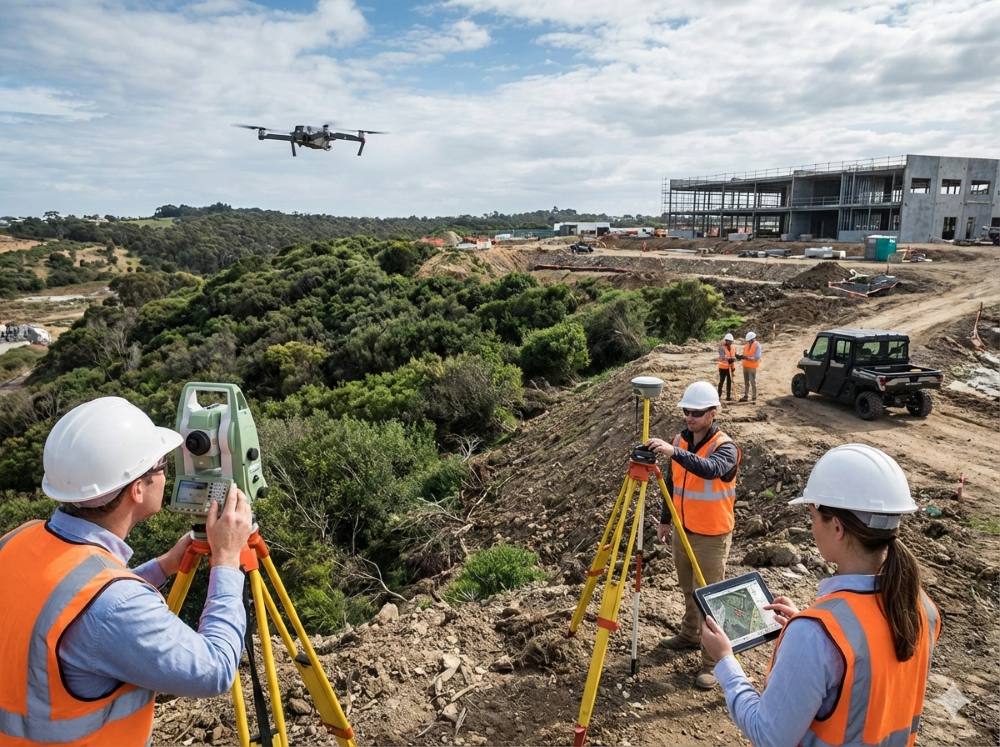
The use of advanced technology such as total stations, high-precision GPS/GNSS, drones, or LIDAR systems allows for more accurate and efficient results. Specialized services such as drone-based topography optimize time and data quality, but require technological investment, which influences the price of the survey.

Deliverables and delivery times

The cost also depends on the type of deliverables requested: topographic plans, contour lines, digital terrain models, technical reports, or files in CAD and GIS formats. Likewise, projects with urgent delivery deadlines may require additional resources, increasing the overall service value.

As you can see, the price of a topographic survey depends on multiple technical and operational factors. For this reason, it is essential to carry out a personalized project evaluation to ensure accurate, reliable results aligned with the client’s needs.