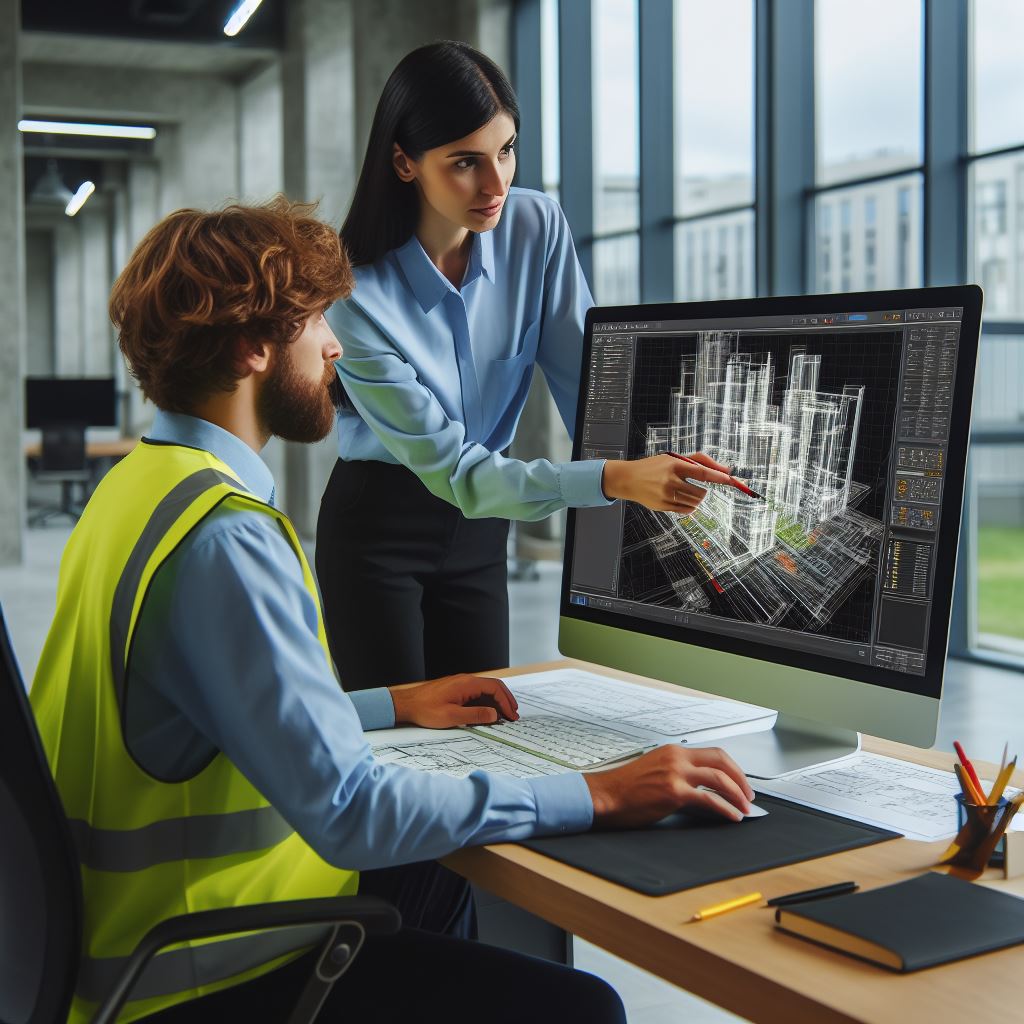

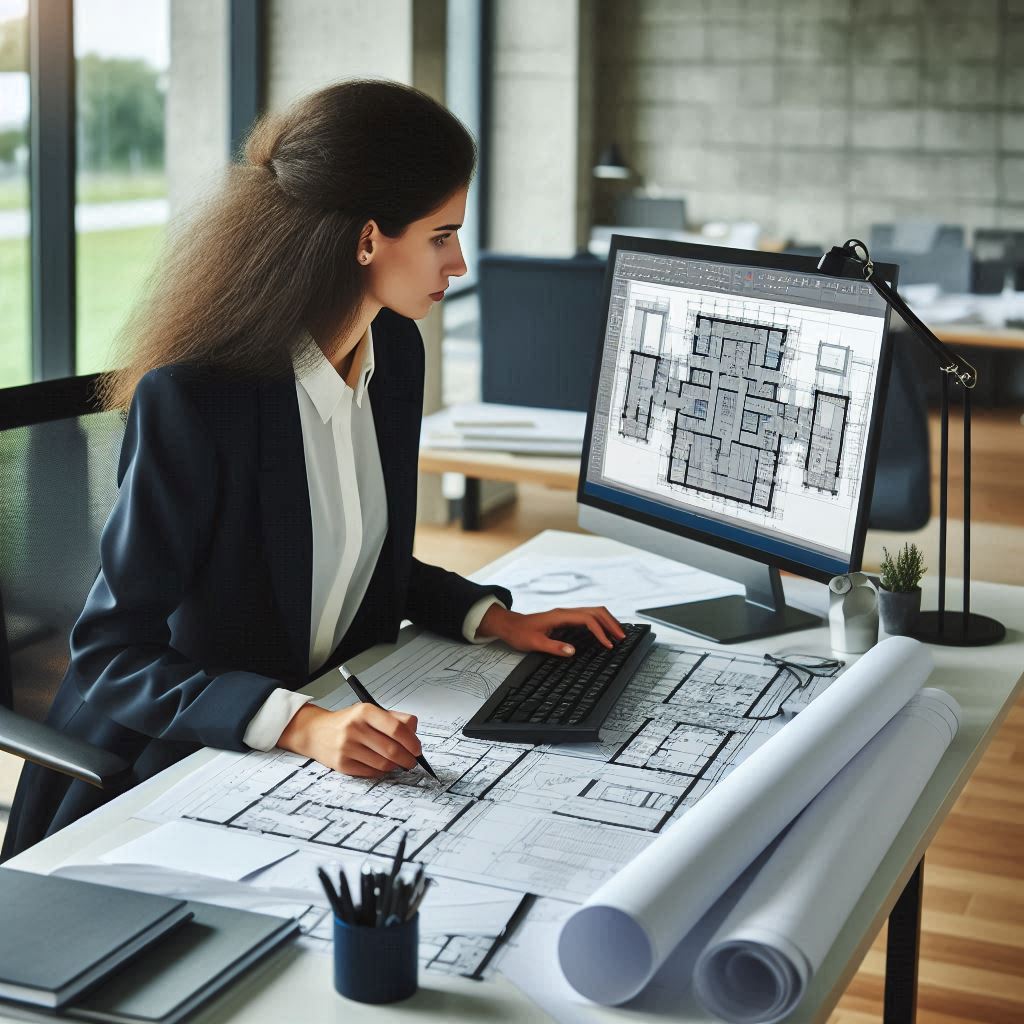
What are the Differences and Similarities between BIM and CAD?

diferencias entre bim y cad
In the construction and architecture industry, CAD and BIM technologies and methodologies are widely used in the development of complex infrastructure. In this article, we will clarify some doubts regarding the parallels and differences between these technologies.
Bear in mind that while both have similarities, they present significant differences in terms of the philosophy and way of working they entail.

Parallels between CAD and BIM

The first thing to highlight is that both technologies aim to create models that represent the project in advance, allowing for a preview so that stakeholders and construction professionals have adequate graphical information to understand and build the plans.
Among the similarities between CAD and BIM, we have:
  1. Graphical Representation: Both methods allow for the creation of 2D and 3D drawings and models, enabling adequate previewing.
  2. Design Presentation: Ideas are difficult to convey without a graphical interface, which is what both technologies provide.
  3. Aid and Guide in Construction: Both the CAD-generated model and the BIM model help in the precise construction of a project.

Divergences between CAD and BIM Technologies

Despite these similarities, there are fundamental differences that distinguish CAD from BIM, especially in terms of information management.
CAD (Computer-Aided Design)
  1. Geometric Focus: CAD design primarily focuses on creating geometric drawings that provide a detailed visual representation but lack additional information about the construction elements.
  2. Limited Data: CAD models, though precise in terms of geometry, do not contain data on the relationships between elements or their behavior. This means additional details, such as material specifications or physical properties, must be managed separately.
  3. Collaborative Aspect: CAD mainly relies on file exchanges where all development versions must be updated, which is prone to errors and conflicts.
BIM (Building Information Modeling)
  1. Beyond Geometry: BIM not only provides geometric representations of the building but also captures metadata, the behavior of construction elements, and information such as materials, duration, costs, etc.
  2. Centralized Database: BIM has a centralized database containing all project information, allowing for efficient and precise management, reducing the likelihood of errors.
  3. Effective Collaboration: The centralized database also facilitates effective collaboration among all project participants. By working with a centralized model, all changes and updates are reflected in real time, ensuring that everyone works with the most recent and accurate information.
  4. Improved Efficiency: Thanks to the integration of measurement data, materials, and resistances, among others, the BIM methodology allows for the simulation of the building’s behavior, improving work efficiency and significantly reducing project errors and risks.
Now that you know the characteristics of BIM and CAD, we invite you to contact us. Acero Estudio has experienced professionals providing BIM consulting or BIM modeling and CAD outsourcing advice. Contact us and request information about our services; we are here to help you grow.

Why is the EU promoting the BIM methodology?

ue fomenta metodologia BIM

The interest of the European Union (EU) in promoting the BIM methodology is based on the identification of a substantial potential to generate significant economic, social, and environmental benefits. This set of technologies integrates process improvements and digital information, enhancing project outcomes for clients as well as better utilization of assets.

The implementation of BIM is a very strong trend in the digital transformation of the architecture and construction sector. This is not just a regional trend but a global practice in expansion. Various reports project that a broader adoption of BIM will generate savings of between 15% and 25% in the global infrastructure market by 2025.

Benefits of BIM

Among its benefits are:

  • Strategic knowledge for making informed decisions about buildings and public infrastructure
  • Improved project planning
  • Risk reduction
  • Better management of building throughout its lifecycle

Furthermore, while the BIM methodology is primarily applied to new construction projects, it can also be applied to renovation, refurbishment, and maintenance projects, which constitute a significant part of the construction sector.

It is estimated that in the coming years, a 10% saving in the construction sector across Europe can be achieved. Importantly, the benefits will not only be economic but also significant in developing greater resource efficiencies and ecological sustainability.

There is an opportunity for companies that align with this common strategic approach at the European level. Therefore, companies that utilize BIM within their frameworks could benefit in public tender processes and procurement methods.

In light of this, it is worth noting that at Acero Estudio, as specialists in BIM consultancy, we have found that the best practices for adopting the BIM methodology are those implemented progressively, allowing organizations to gain experience while minimizing errors.

If you want to learn more about our BIM services, please do not hesitate to contact us. We are at your service.

BIM and the MacLeamy Effort Curve, Optimizing the Construction Process

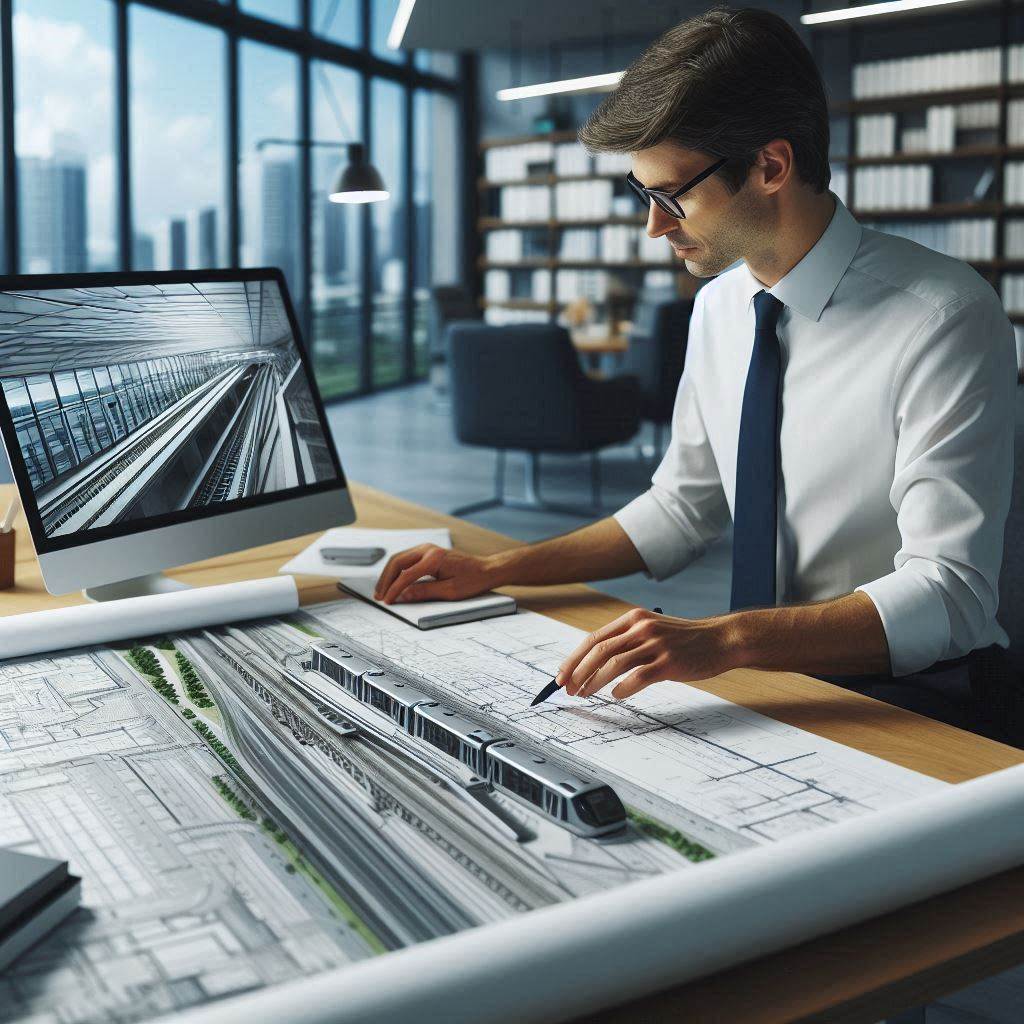
profesional bim trabajando en modelo bim de estacion de metro

The construction industry has benefited greatly from the BIM methodology because it has changed the processes and also the way they are designed and built. One of the substantive changes is in the redefinition that BIM proposes regarding the stress curve throughout the construction process: the well-known MacLeamy Curve.

The MacLeamy Curve

The MacLeamy Curve illustrates the relationship between the effort invested in the design and construction phases of a project and the impact it has on its quality and cost. Traditionally, most of the effort was applied during the construction phase. However, the MacLeamy Curve proposes a paradigm shift: investing more effort in the early design stages can have a significant impact on reducing costs and errors during construction.

Intersection of BIM and MacLeamy Curve

The BIM methodology aligns perfectly with the MacLeamy Curve. BIM promotes early collaboration between teams that allows potential problems to be identified and resolved before they become costly fixes during construction. Early collaboration and information sharing result in greater efficiency and accuracy, translated into the effort curve proposed by MacLeamy.

Advantages of the BIM Methodology

  • Cost Reduction: Detecting conflicts and errors in the design phase avoids unforeseen expenses during construction.
  • Improves Quality: The precision and information that BIM provides leads to higher quality construction.
  • Time Optimization: Construction time is reduced thanks to the detailed planning required by BIM.
  • Sustainability: BIM software packages allow you to analyze the energy efficiency and sustainability of any project.

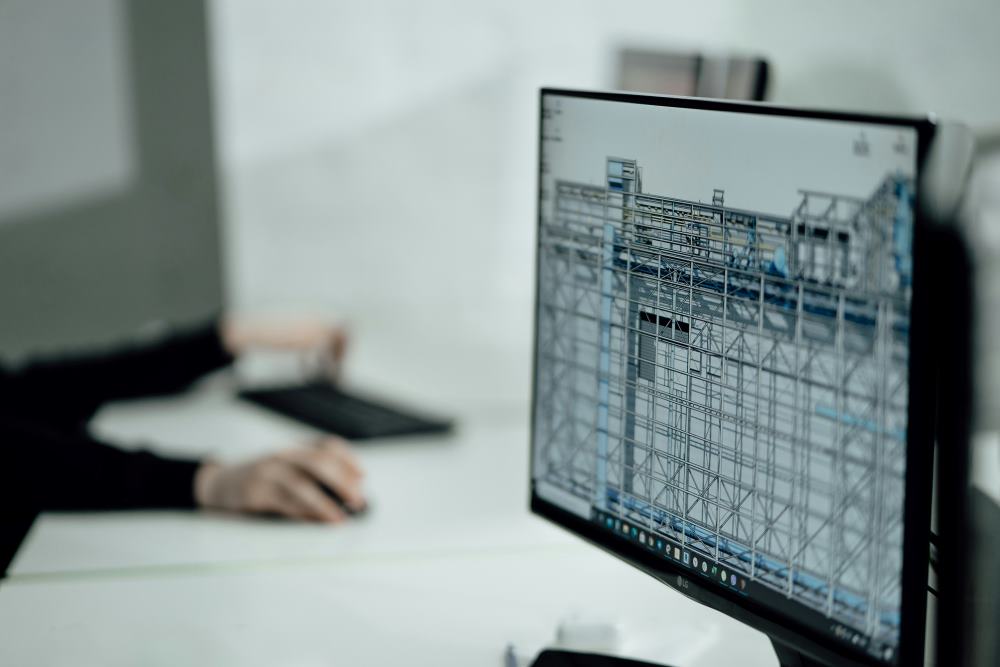
bim model of construction
The use of the BIM methodology is essential to understand how early planning and effort can lead to more successful and efficient project execution. The development of the methodology, the software packages used and the complements that help generate projections are enhancers that improve the results of increasingly advanced models.

Despite these benefits, this methodology requires experience and trained professionals with a good command of the trade. Acero Estudio, a company specialized in services for the architecture and construction sector, has a team of expert BIM consultants who will help you turn your ideas into solid realities. Contact us and request information about our services, we are here to help you.

What level of development is suitable for construction projects?

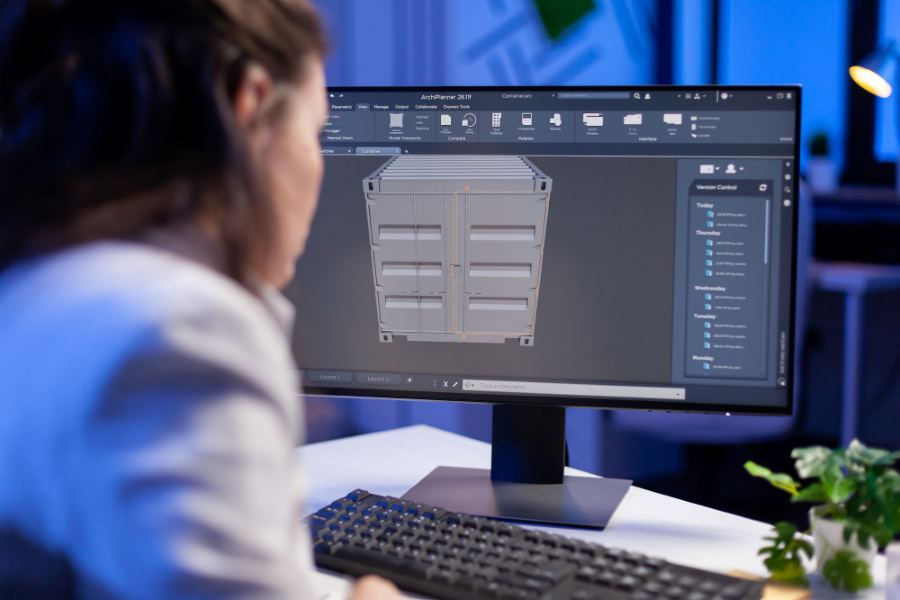
bim modeling service

The optimal Level of Development (LOD) for construction projects varies depending on the specific needs of each project and the stage it is in. In the Building Information Modeling (BIM) methodology, LOD refers to the level of detail and development of a digital model.

LOD provides a standardized structure that guides the creation and management of BIM models, allowing for a clear understanding of the information contained in the model at each stage of the project. By implementing LOD, we ensure the consistency and accuracy of the data, facilitating collaboration among different project stakeholders and improving decision-making efficiency.

Different Levels and Their Uses:

Generally, the different levels of LOD are used as follows:

  • LOD 100: Used in the early stages of the project, providing a conceptual representation of the design without specific details. It is useful for initial planning and project visualization.
  • LOD 200: Focuses on the general geometry of the project, including basic dimensions and spatial relationships. It is suitable for the schematic design phase, where the main project ideas are explored and refined.
  • LOD 300: Provides an accurate representation of individual project elements, with specific details such as exact sizes and shapes. It is useful during the detailed design phase and coordination among disciplines.
  • LOD 400: Includes detailed information about the manufacturing and assembly of project components, allowing for the generation of construction drawings and virtual construction simulation.
  • LOD 500: Represents the as-built information of the project, including precise installation and manufacturing details. It is useful for building management and maintenance once completed.

For residential construction projects, the most suitable BIM LOD is typically LOD 300 or higher, as a high level of detail is required for home design and construction.

In industrial construction projects, such as factories or production plants, LOD 400 is commonly used due to the need for detailed information about industrial systems and equipment.

For infrastructure construction projects, such as roads or bridges, LOD 300 may be sufficient in the design stages, but LOD 400 may be necessary for precise planning and construction of structural elements.

In commercial construction projects, which may include office buildings, shopping centers, or hotels, LOD 400 is widely used to ensure accuracy in planning and execution.

We invite you to visit Acero Estudio and inquire about our BIM consulting services, where we offer your company access to our BIM consultants specialized in BIM with extensive experience. Additionally, if you have further questions, you can inquire about our BIM Modeling service, which allows you to completely outsource the generation of your BIM models.

The Impact of BIM on the Supply Chain of a Project

impacto positivo de BIM en la cadena de suministro

As we already know, the BIM methodology has a number of benefits in improving project efficiency, visualization, and centralizing information. One of the less mentioned aspects is that this working model also has a positive impact on inventory management and procurement logistics.

By having a complete BIM model, a team of professionals can project the necessary inputs for more precise material procurement, avoiding losses that reduce project efficiency. Likewise, this will allow us to easily track the flow of materials from acquisition to installation at the workplace and determine if there are leaks to take necessary measures at the site.

A useful example of a good practice in a BIM model is to include detailed information about material suppliers, delivery times, and storage locations on site. This allows the project team to plan ahead and efficiently coordinate material delivery to avoid construction delays.

Furthermore, BIM models help us optimize inventory management by accurately forecasting material needs. By analyzing the quantities and expected delivery dates in the model, project managers avoid over-purchasing materials, reduce costs associated with storage, and manage inventories more accurately.

Finally, the BIM methodology not only improves the accuracy of design and planning in the construction industry, but also optimizes inventory management and logistics, resulting in a more efficient and cost-effective supply chain for construction projects. Avoid errors in your models with Acero Estudio’s BIM consulting service, we are at your service.

The Benefits of Outsourcing BIM Modeling

Outsourcing BIM modeling services provides access to a pool of highly skilled professionals with specialized expertise in BIM software and methodologies, without incurring the costs associated with having such personnel in the company. These experts bring years of experience and advanced knowledge to the table, ensuring that projects are executed with precision and efficiency. By leveraging the expertise of outsourced teams, firms can tackle complex modeling challenges with confidence and deliver high-quality solutions to their clients.

Moreover, one of the primary benefits of outsourcing BIM modeling services is cost savings. Outsourced firms often operate in regions with lower labor costs, allowing clients to access top-tier talent at a fraction of the cost of maintaining an in-house team. Additionally, outsourcing eliminates the need for investment in infrastructure, software licenses, and training, further reducing operational expenses. By outsourcing BIM modeling services, firms can optimize their budget allocation and achieve greater profitability on their projects.

Furthermore, outsourcing offers firms the flexibility to scale their resources up or down based on project requirements. Whether it’s a large-scale development or a small-scale renovation, outsourced teams can quickly adjust their capacity to meet the demands of the project. This scalability ensures that firms have access to the right resources at the right time, enabling them to deliver projects on schedule and within budget.

By outsourcing BIM modeling services, firms can streamline their project workflows and improve overall efficiency. Outsourced teams are well-versed in BIM best practices and standards, allowing for seamless collaboration and coordination across disciplines. With real-time access to accurate project data and 3D models, stakeholders can make informed decisions, identify potential clashes, and mitigate risks early in the modeling process. This proactive approach minimizes rework, reduces project delays, and enhances project outcomes.

Lastly, outsourcing BIM modeling services allows firms to focus on their core competencies and strategic initiatives. By delegating modeling-related tasks to external partners, firms can allocate their internal resources more effectively, concentrating on value-added activities such as design innovation, client engagement, and business development. This strategic alignment enables firms to stay ahead of the competition and drive sustainable growth in a rapidly evolving industry.

Our BIM consulting service and security in your construction projects

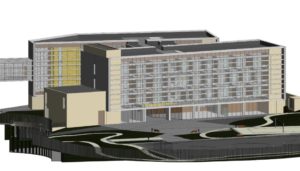
modelo bim de un hospital

Learn how Acero Estudio‘s BIM Consulting services improve the safety culture in all stages of the construction process.

With our BIM services, construction teams can create detailed digital models that include information on the location of equipment, materials, potential risks and safety procedures. This information allows project managers to identify and address potential risks before they occur, minimizing the likelihood of accidents in the workplace.

Effective communication is vital to ensure safety on construction projects. Our BIM services facilitate communication between all team members, from designers and engineers to workers on site. By using a centralized digital model, everyone involved can access the same updated information in real time, reducing the possibility of misunderstandings and miscommunications that could jeopardize security.

It is important to take into consideration that the BIM methodology allows you to simulate different scenarios and evaluate potential risks before they occur. By creating 3D digital models, we can identify potential safety issues and test different solutions before implementing them on the construction site. This not only helps prevent accidents, but also allows construction crews to prepare for emergencies and respond effectively should they occur.

In addition to improving workplace safety, our BIM services can also help construction companies comply with safety standards and regulations set by local and national authorities. By using accurate and up-to-date digital models, companies can demonstrate compliance with security requirements and avoid potential penalties and fines for non-compliance.

By investing in our BIM services, companies can improve the safety, efficiency and profitability of their construction projects, allowing them to stand out in an increasingly competitive market and ensure the long-term success of their operations.

Take into consideration that our BIM consulting services are not only a powerful tool to improve the efficiency and quality of construction projects, but also play a fundamental role in promoting a culture of safety in the sector. Contact us and request more information about our consulting services for companies.

BIM Consulting and the digital transformation of construction companies

bim consulting services and digital transformation

In the construction industry, companies face various challenges, including adapting to new technologies to remain competitive. Our BIM consulting service is presented as a fundamental tool to promote digital transformation in the construction sector.

Acero Estudio, through its BIM consulting service, based on the BIM (Building Information Modeling) methodology, offers construction companies the opportunity to optimize their design, construction and project management processes through implementation and training in the use of intelligent digital models. The result is complete and detailed models that contain detailed information about every aspect of a project, from geometry and structure to materials, costs, maintenance projections, strength calculations, etc.

All this wide range of information is established with the aim of achieving more accurate planning and informed decision making.

As is known, one of the main advantages of the BIM methodology is its collaborative nature, but achieving it is not easy, especially because there is a lot of aversion to change due to fear, lack of knowledge or trust in inherited methods. Acero Estudio and its BIM consultants have the knowledge, the experience and that extra pedagogy that helps us to transmit the right ideas to your team in such a way that they can feed and help to gradually and efficiently build the centralized digital model where everyone actors access it in real time with minimal errors and risks in the construction process.

Helps in efficiency and meeting deadlines

Companies worry about their efficiency and the construction sector is no exception. In this aspect, it is worth noting that the BIM methodology speeds up the coordination processes between areas, improves communication, making it unequivocal in the face of a model that has the precise data and with this it is possible not only to have a nice digital picture of the work but also a great efficiency in each of the processes, planning, purchasing logistics, avoiding unnecessary expenses and delays.

It is worth noting that not all construction companies still use the BIM methodology, therefore encouraging this type of development within your company will not only help improve the efficiency of your processes but will also help you differentiate yourself from the competition, attracting more clients. large and serious companies looking for best practices.

Contact Acero Estudio today and let’s talk about how the BIM methodology can help you improve your processes. We are at your service.

Topography in the Wind Generation Industry

topografia para centrales de generacion-electrica

The growing concern for clean electricity generation sources means that wind energy generation continues to experience significant growth. For these reasons, the construction and installation of wind energy projects are works of great importance both for the investments they represent as well as for the benefits they bring to the cities they supply.

Obviously when it comes to wind, wind power plants must be installed in places where there is a deep understanding of the terrain. In this context, topography, together with advanced technologies such as aerial photogrammetry, BIM and 3D laser scanning, play a fundamental role in optimizing the installation of wind farms.

Efficient Design Depends on Accurate Data

Topography provides us with detailed information about the shape of the land, elevations, slopes and geological characteristics. Integrating this information with techniques such as photogrammetry allows for the creation of accurate three-dimensional models of the site, facilitating the design of efficient wind farms. The combination of topographic data and 3D models ensures a complete understanding of the environment, resulting in an optimized design of the turbine layout and its height to maximize wind capture.

Identification of Obstacles and Risks

3D laser scanning has become an essential tool for identifying potential obstacles in the terrain, such as buildings, vegetation and geological structures. This level of detail not only helps avoid problems during the construction phase, but also minimizes operational risks throughout the life of the wind farm. Anticipating and mitigating potential challenges contributes to the long-term safety and profitability of the project.

Project Planning and Management

The implementation of BIM in wind energy projects allows for comprehensive and efficient information management. From the design phase to construction and operation, BIM facilitates collaboration between different disciplines, improving coordination and reducing errors. Topography, when integrated into BIM models, offers a holistic vision of the project, improving decision making and optimizing resources.

Likewise, with the integration of 3D laser scanning and BIM (ask about our BIM consulting service) we can integrate simulations into the generated model that help us anticipate potential risks that affect the performance of the wind farm, such as the construction of surrounding buildings, etc.

In summary Acero Estudio‘s specialized focus on geography, architecture and construction analysis technologies allows your company to benefit from the integration of advanced technologies that will reduce risks, improve the economics of the project and guarantee its sustainability.

How 3D Laser Scanning Revolutionized Architecture Projects

modelo de edificio historico generado por el láser escaner 3d

The continuous advancement of technology has radically transformed the way in which architectural projects are planned and carried out. One of the most important technological advances in recent times is without a doubt the 3D laser scanner.

This important tool improves efficiency in digital modeling efforts but also redefines precision in the design and construction of structures in critical areas that previously required intensive use of personnel.

Use of the 3D Scanner in the Renovation of Historical Heritage

3D laser scanning plays an important role in the renovation of historic buildings, where preservation of the original architecture is essential. The use of this important tool allows the machine to capture details not visible to the naked eye, helping to generate an exact model of the architectural elements.

Urban planification

The demographics of cities and their growth mean that urban planning faces new, increasingly complex challenges. In these cases, precision and space optimization are essential. 3D laser scanning together with other techniques such as photogrammetry with drones and techniques such as Scan to BIM (learn about our BIM Consulting service) has proven to be very useful.

The ability to capture three-dimensional information in real time speeds up decision-making and contributes to a more efficient and functional urban design.

Building Construction

In the construction sector where labor is intensive, companies seek to improve efficiency without affecting labor aspects; That is why the use of techniques such as the 3D laser scanner together with the BIM methodology are mandatory to achieve efficiency and speed.

3D laser scanning not only allows a quick, objective and detailed inspection of the works but, combined with various software, offers the early detection of possible structural problems, guaranteeing exceptional safety standards.

escaneo laser 3d de gran calidad
In addition to the indicated benefits, our equipment allows you to achieve high-quality scanning for your projects.

Interior design

For interior design projects, the 3D laser scanner paves the way for unrestricted creativity. This feature allows designers to accurately visualize their ideas with better aesthetic and practical functional results.

Now that you know more clearly the advantages and benefits of the 3D laser scanner, do not hesitate to contact us, our sales team will provide you with the best information to achieve spectacular results in your project. We are at your service.