
What Is BIM Energy Analysis and What Is It Used For?

consultoria bim energy

There is no doubt that energy efficiency is a key factor in modern construction projects, especially due to the reduction of long-term operational costs. In this context, the BIM methodology has evolved to integrate advanced analysis tools that make it possible to evaluate a building’s energy performance from the earliest design stages, providing greater control and precision in decision-making. Many organizations rely on a specialized BIM company to properly implement these processes.

BIM Energy Analysis

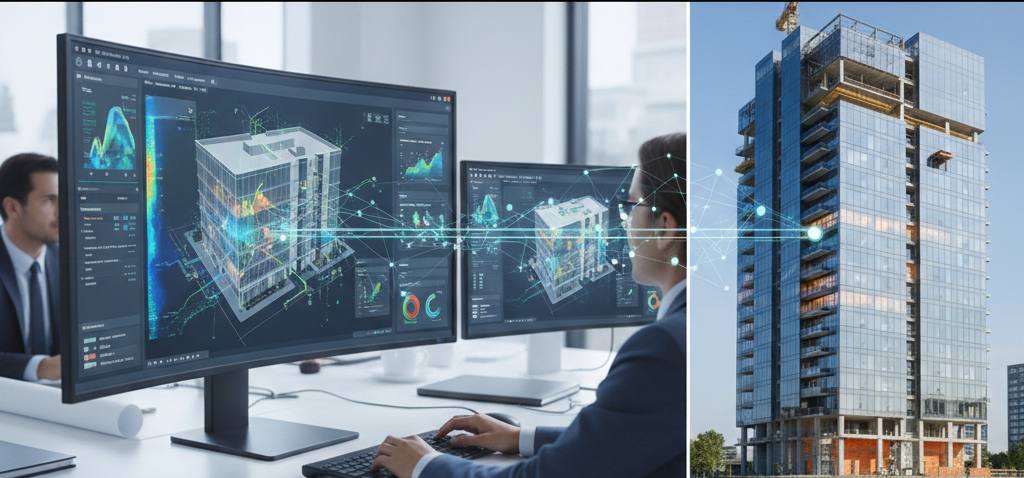
It is an application within the BIM environment that allows the simulation and analysis of a building’s energy behavior based on a digital model. Through the geometric and technical information of the project, it is possible to evaluate variables such as energy consumption, thermal loads, natural lighting, and system efficiency, making it easier to compare different design alternatives before construction begins.

The operation of BIM Energy Analysis is based on the creation of a BIM model enriched with relevant energy data. This model is used to run simulations that help predict energy consumption and building performance under different scenarios. During this process, the support of BIM consulting services is essential to ensure that the analyzed parameters are accurate and aligned with the project’s objectives.

Benefits of BIM Energy Analysis

  • Design optimization
  • Reduction of energy consumption
  • Improved thermal and visual comfort of spaces
  • Lower operational costs and compliance with sustainability standards and certifications

Energy analysis through BIM makes it possible to assess factors such as building orientation, thermal envelope, materials, natural ventilation, and HVAC systems. To achieve reliable results, it is essential to have proper BIM consulting services, since the quality of the model’s information directly influences the accuracy of the simulations.

Likewise, BIM Energy Analysis plays an important role in the evaluation and control of already developed projects. Through BIM consulting services, it is possible to review the model, verify its energy consistency, and identify opportunities for improvement, ensuring that the project meets established standards.

As you can see, BIM Energy Analysis is an essential tool in modern construction, as it enables the design of more efficient, sustainable, and cost-effective buildings. Its proper implementation, supported by BIM specialists, makes a significant difference in the quality and energy performance of construction projects. Contact us and let’s talk about your projects—we’re here to help.

From the Gantt Chart to the 4D BIM Model

from gantt chart to bim 4d

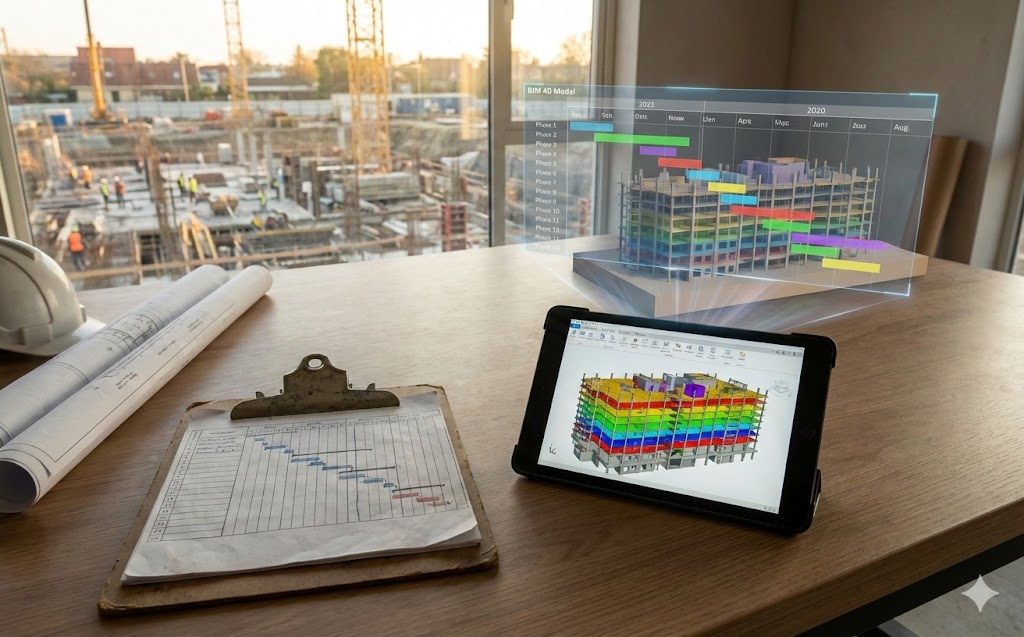
Time planning is one of the most critical aspects of construction projects. Traditionally, the Gantt chart has been the primary tool used to organize and control construction activities. Today, with the incorporation of the BIM methodology, the 4D model emerges, integrating time directly into the three-dimensional model, allowing for a clearer and more efficient visualization of the construction process.

The Gantt Chart in Construction

The Gantt chart is a graphical representation of a project schedule, showing activities, their duration, and their sequence over time. It is widely used due to its simplicity and ease of understanding.

Advantages of the Gantt Chart

  • Easy to create and understand.
  • Clear visualization of the total project duration.
  • Widely used and accepted within the industry.

Limitations of the Gantt Chart

  • It does not allow visualization of the construction process in space.
  • Makes it difficult to detect conflicts between activities.
  • Limited integration with the project design.

Advantages of BIM 4D

With BIM 4D, the three-dimensional BIM model is linked to the construction schedule, adding time as the fourth dimension. This makes it possible to visually simulate how the project is built over time.

Components of the 4D Model

  • BIM 3D model (architecture, structure, and MEP systems).
  • Construction schedule.
  • Linking construction elements with scheduled activities.

From Gantt to BIM 4D: Transition Process

To develop a 4D model, it is essential to have a properly organized BIM model, structured by phases and construction elements. Services such as BIM services enable the creation of models suitable for this type of analysis.

Schedule Development

The schedule can be created using traditional tools, maintaining the logic of the Gantt chart, while considering its future integration with the BIM model from the very beginning.

Each scheduled activity is linked to specific model elements, generating a visual simulation of construction progress. This process is often guided by BIM consulting services, which help define the most effective implementation strategy.

Comparison Between Traditional Gantt and BIM 4D

  • The Gantt chart shows dates; BIM 4D shows the construction process.
  • BIM 4D facilitates early detection of errors.
  • Improves communication among project teams.

The use of BIM 4D allows for a better understanding of the project, reduces rework, and improves time control during construction. Many organizations choose BIM outsourcing solutions to efficiently implement this methodology.

In real-world projects, BIM 4D is used to simulate different construction scenarios, optimize activity sequencing, and anticipate issues before they occur on site. Specialized BIM firms, such as a BIM services company, typically lead these types of implementations.

Limitations of BIM 4D

  • Need for technical training.
  • Greater initial planning effort.
  • Coordination among different disciplines.

The transition from the Gantt chart to the BIM 4D model represents a significant advancement in construction planning. By integrating time into the three-dimensional model, decision-making is improved, errors are reduced, and the construction process is optimized—establishing BIM 4D as a key tool in modern construction. Contact Acero Estudio, we are a BIM services company specialized in international-level projects.

Guide for the Quality Audit of BIM Models in Projects

key factors in bim audit

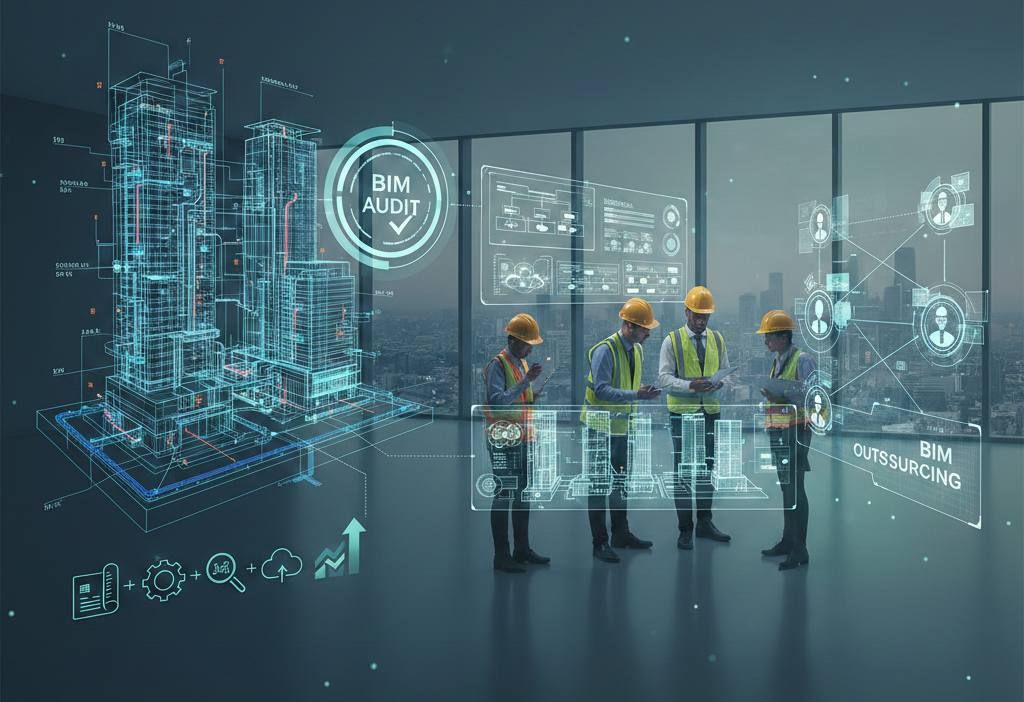
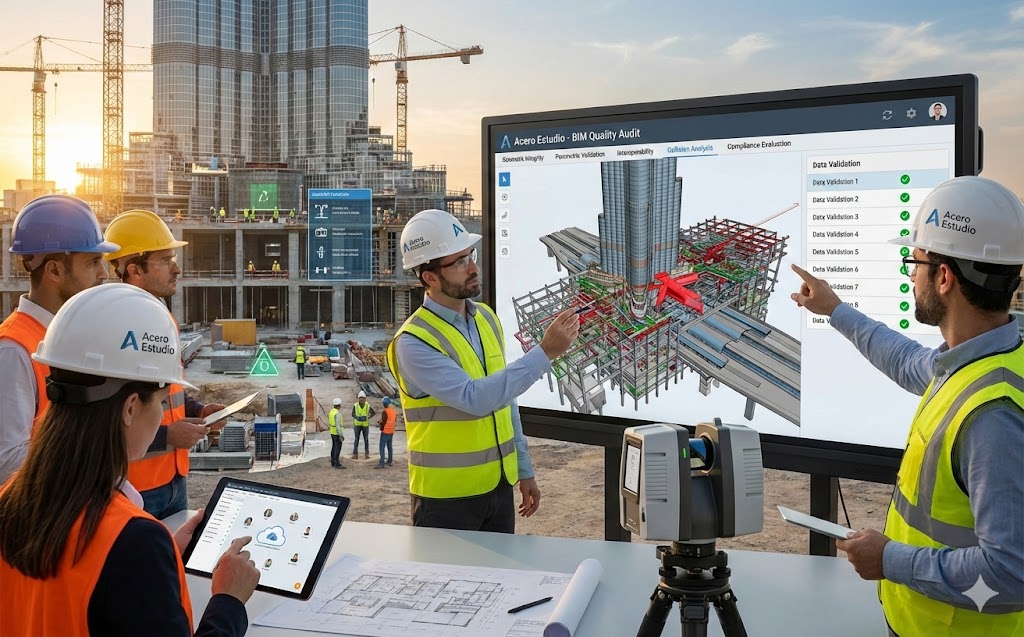
When it comes to large-scale projects, the quality of BIM models becomes a critical factor that can determine the success or failure of the entire initiative. At Acero Estudio, as an company specialized in BIM and a comprehensive service provider for the AEC sector, we have developed an exhaustive methodology for BIM model quality auditing that we want to share in this definitive guide.

BIM auditing for large-scale projects

Large-scale projects involve multiple disciplines, numerous professionals, and a level of technical complexity that demands precision. An error in the BIM model can lead to costly delays, on-site conflicts, and even structural safety issues. Auditing is not a luxury, but a strategic necessity that ensures the integrity of the digital model before its physical implementation.

Our experience in surveying services and 3D laser scanning has taught us that precision in data capture is only the first step. True excellence is achieved when that data is integrated into coherent, complete, and reliable BIM models.

The 5 pillars of our BIM audit

1. Geometric integrity verification: We validate that all dimensions, shapes, and spatial relationships in the BIM model correspond exactly to the project’s real conditions or to the approved designs.

2. Parametric information validation: We audit that the parameters of each element—from technical specifications to manufacturing and maintenance data—are complete, consistent, and useful throughout all project phases.

3. Interoperability control: We verify that the model can be efficiently used by all stakeholders, from architects and engineers to contractors and facility managers, without any loss of information.

4. Clash detection analysis: We implement automated detection of interferences between systems that could generate costly issues during construction.

5. Compliance assessment: We ensure that the project complies with modeling standards, including local and international regulations, as well as the client’s specific requirements.

A lesser-known fact is that, according to industry data, projects that implement systematic BIM quality audits reduce requests for information (RFIs) during construction by an average of 40% and decrease costs associated with unexpected changes by approximately 25%.

Advanced technologies in our methodology

Our BIM consultancy incorporates artificial intelligence tools for predictive analysis of potential issues, specialized software for 4D clash detection (including the time dimension), and cloud-based collaborative platforms that enable real-time audits even with geographically distributed teams.

For projects that require exhaustive technical documentation, we complement our services with high-precision CAD outsourcing, ensuring that drawings and details derived from the BIM model maintain the same quality and consistency as the digital model.

The quality auditing of BIM models in large-scale projects goes beyond a simple technical review. It is a strategic process that:

  1. Protects the project investment by identifying issues before they materialize
  2. Optimizes construction processes through accurate models
  3. Facilitates collaboration across all disciplines
  4. Generates a valuable digital asset for future operations and maintenance
  5. Meets the highest standards of excellence

At Acero Estudio, we have refined this methodology through years of experience in BIM consultancy for complex projects, combining our expertise in BIM modeling to deliver a comprehensive solution that guarantees quality from the very first to the very last pixel of the digital model.

What Does the Price of a Topographic Survey Depend On?

what does the price of a topographic survey depends on

The price of a topographic survey is not a standard value, as each project presents different technical and operational conditions. Factors such as the type of study, land size, technology used, and requested deliverables directly influence the final cost.

For this reason, a professional topography company always carries out a prior evaluation before defining a budget.

Type of survey and level of precision

The cost varies depending on the type of survey required: planimetric, altimetric, planialtimetric, cadastral, or geodetic. In addition, the level of precision requested is key, as projects intended for design, construction, or construction control require greater accuracy, more controls, and specialized equipment, which increases the price of the topography service.

Area and land characteristics

The size of the land directly influences the amount of field and office work required. The larger the area, the greater the technical effort involved. Likewise, land with steep slopes, dense vegetation, existing structures, or natural obstacles increases the complexity of the survey, affecting the final cost.

Location and accessibility

The location of the property is another determining factor. Land located in rural areas, with difficult access, or far from the city involves higher logistical costs, equipment transportation, and travel time for technical personnel, which is reflected in the service budget.

Technology and equipment used

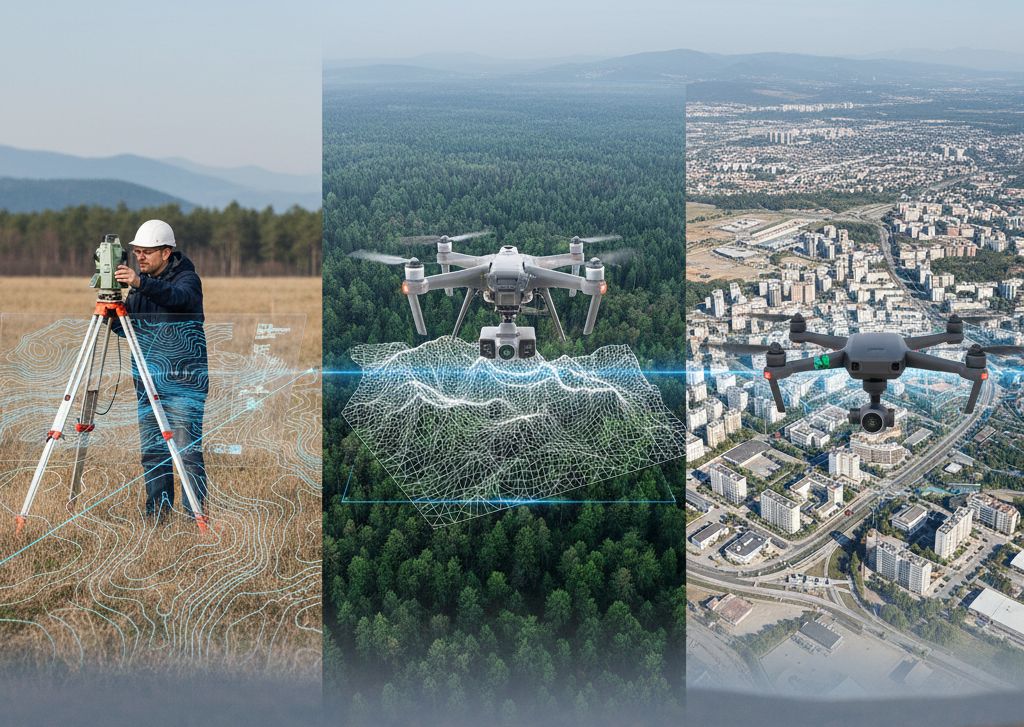
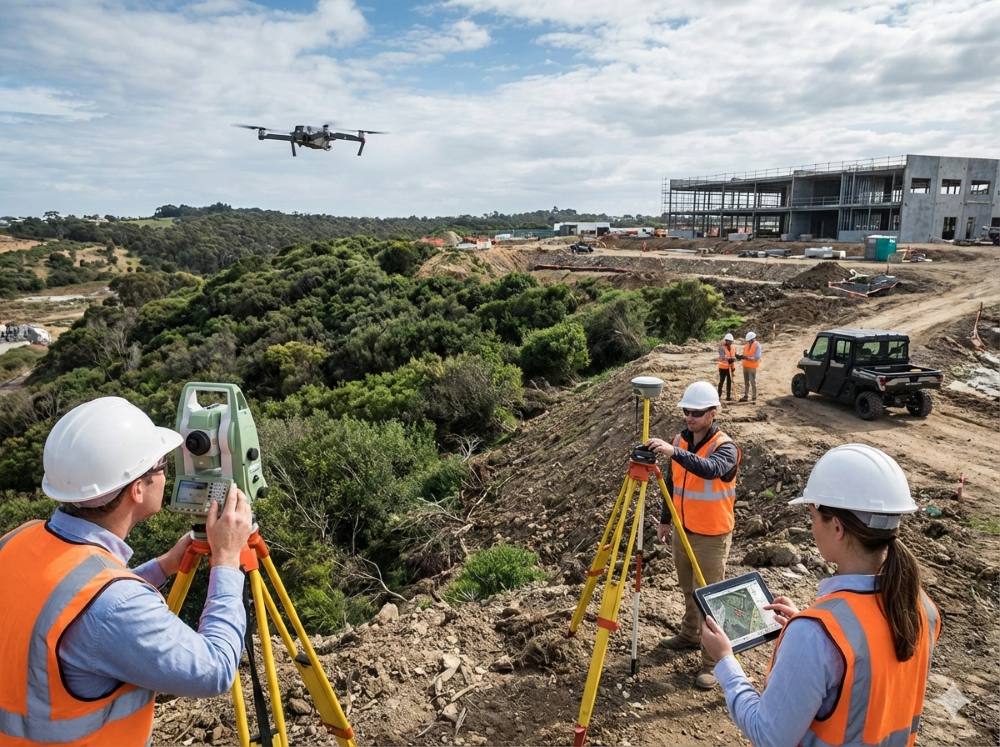
The use of advanced technology such as total stations, high-precision GPS/GNSS, drones, or LIDAR systems allows for more accurate and efficient results. Specialized services such as drone-based topography optimize time and data quality, but require technological investment, which influences the price of the survey.

Deliverables and delivery times

The cost also depends on the type of deliverables requested: topographic plans, contour lines, digital terrain models, technical reports, or files in CAD and GIS formats. Likewise, projects with urgent delivery deadlines may require additional resources, increasing the overall service value.

As you can see, the price of a topographic survey depends on multiple technical and operational factors. For this reason, it is essential to carry out a personalized project evaluation to ensure accurate, reliable results aligned with the client’s needs.

How Topography Is Vital for Mega Projects: The Case of the New Central Highway in Peru

importancia de la topografia para las megaobras

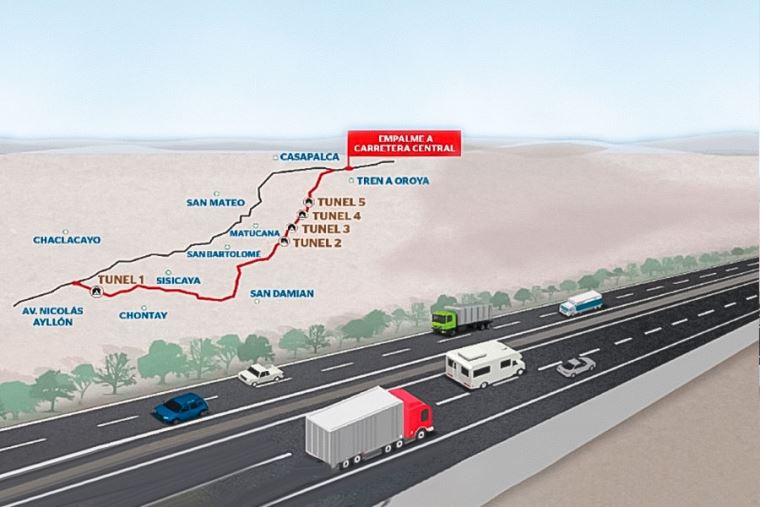
Topographic studies are essential for the construction of large-scale transportation infrastructures that require detailed information and cutting-edge technology. Topographic surveys, geodesy, and other related services help ensure the proper execution of each stage of a project. An emblematic example is the New Central Highway of Peru, one of the most ambitious infrastructure works in recent times, where topographic and geodetic studies are critical.

A Large-Scale Project to Connect Peru

The New Central Highway will require an investment of more than S/ 24 billion and will extend 185 km, including 33 km of tunnels and 19 km of viaducts. This mega project aims to reduce travel time between the coast and the country’s central region from six hours to just two and a half, strategically linking the regions of Lima and Junín.

For a project of this magnitude, precise topographic information is indispensable. Every meter of land must be accurately surveyed, modeled, and georeferenced so that the design, engineering, and construction phases can be executed without deviations or cost overruns.

Topography and Geodesy: The Technical Foundation of the Project

In this type of project, topography forms the technical backbone, as it allows for the accurate understanding of the terrain’s physical characteristics: contour lines, slopes, geographical features, and surface details. Geodesy, on the other hand, provides the necessary spatial reference to ensure the absolute and relative position of each point within a global coordinate system.

The combination of these disciplines enables:

  • Generation of high-precision digital terrain models.
  • Definition of road alignments and axes that optimize layouts and reduce earthworks.
  • Accurate positioning of complex structures such as tunnels and viaducts.
  • Deformation control and progress monitoring during construction.
  • Reduction of technical and economic risks, avoiding staking errors and delays.

Our Contribution to Large-Scale Infrastructure Projects

With decades of experience in topographic and geodetic surveys for complex infrastructure projects in both Peru and Spain, Acero Estudio deploys specialized teams and advanced technology such as:

  • 3D laser scanning services to capture geometries through dense point clouds in seconds.
  • Drone photogrammetry to cover large areas quickly and with high accuracy.
  • LIDAR systems capable of penetrating vegetation to obtain precise terrain information even in forested or hard-to-access areas.
  • High-precision GNSS equipment and total stations, ensuring exact geodetic references.

In addition, our technical team processes and delivers data in formats compatible with engineering and BIM software, facilitating direct integration into design and construction workflows.

Building the Future with Precision

Mega projects demand decisions based on reliable data and the support of an experienced surveying company. If you are developing a large-scale project, contact us. Our specialized team is ready to support you from the planning stage through execution, ensuring accurate and dependable results at every step.

Use of LIDAR in topography for mining

lidar en topografia para mineria

Modern mining, which processes hundreds of tons each day, requires precise and reliable information to ensure safety, optimize resources, and plan large-scale operations. Thanks to the use of advanced laser sensors that can be integrated into drones, LIDAR captures millions of 3D points and generates detailed digital terrain models.

Large-Scale Topographic Surveys

One of the greatest benefits of LIDAR in mining is the ability to carry out topographic surveys of vast areas in a short time. In the past, a team of surveyors working with traditional instruments was necessary, but today LIDAR technology provides up-to-date information to plan new explorations, optimize access, and design open pits quickly through:

  • Point collection with drones
  • Data processing with specialized software
  • Generation of topographic maps and delivery to stakeholders
  • Volume and Material Management

LIDAR’s accuracy in data collection allows mining companies to calculate extraction volumes after just one workday, enabling ore grade calculations and income projections that are essential for operational and financial planning.

Slope Monitoring and Operational Safety

Another critical aspect for operational stability in mining is verifying slope stability. LIDAR technology enables the creation of geotechnical models that identify deformations, movements, and landslide risks. This contributes to safer operational management while reducing personnel exposure to hazardous areas.

3D Digital Models for Mine Planning

Beyond detailed terrain capture, LIDAR also generates 3D digital models that support mining planning. These models make it possible to simulate scenarios, analyze alternatives, and optimize the design of pits, access roads, and more.

  • Key Benefits of LIDAR in Mining
  • Higher accuracy compared to traditional surveying methods
  • Time and cost savings in data capture
  • Improved worker safety, by reducing the need to enter hazardous zones
  • Comprehensive and up-to-date information, useful for exploration, exploitation, and mine closure

LIDAR in mining is now one of the most valuable technologies for improving efficiency, safety, and sustainability in operations. From volume control to geotechnical risk prevention, its applications offer a competitive advantage to companies seeking to optimize processes and ensure precision at every stage of a project.

If you want to learn more about our LIDAR services, contact us. We are Acero Estudio, a surveying company specialized in LIDAR, drone photogrammetry, and 3D laser scanning. We are at your service.

BIM Modeling: What Is It?

modelo bim

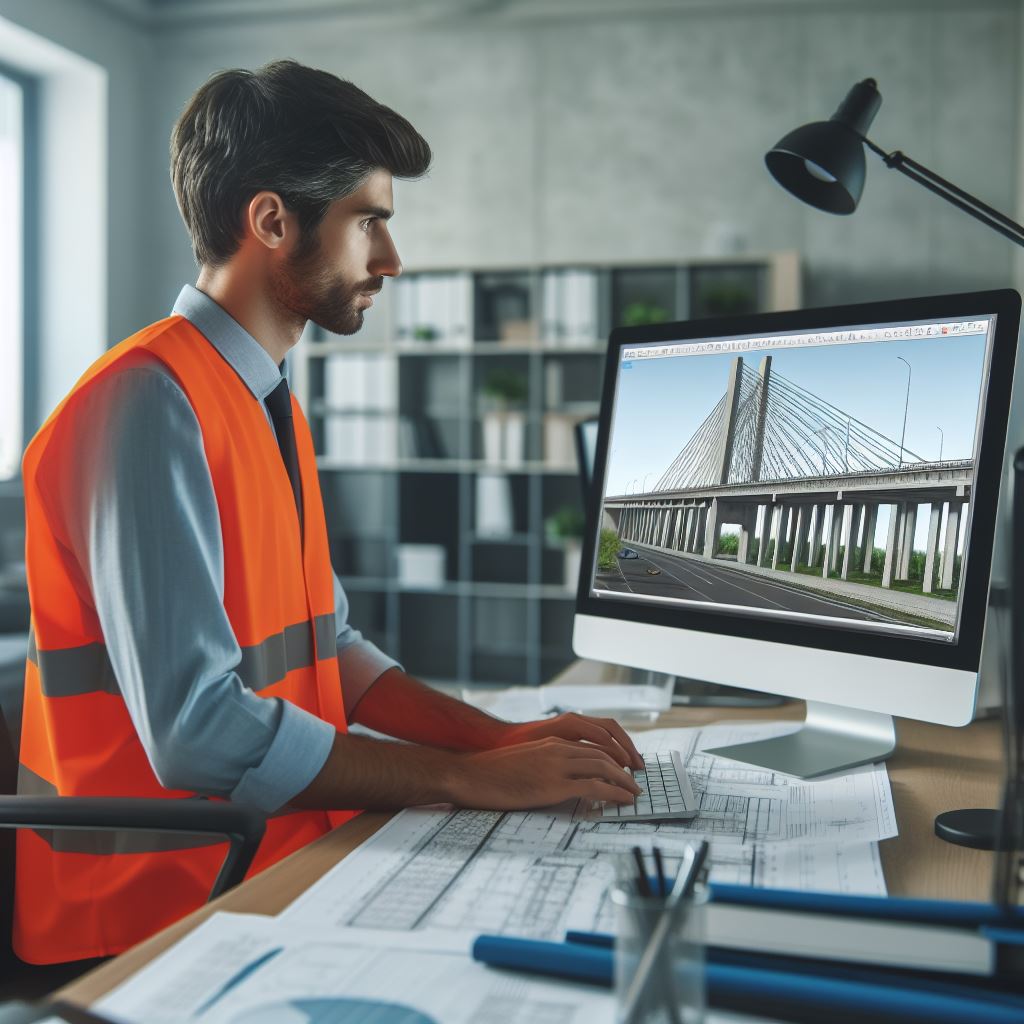
BIM modeling is a 3D development process that basically consists of creating a digital model of a construction project. Unlike traditional drawings or computer-aided design, a BIM model brings together all the project information in a single environment, allowing for better planning, error detection before construction, and coordination of all teams involved.

What methods of BIM model generation are there?

There are different methods to generate a BIM model, depending on the available data and the stage of the project:

From CAD drawings

If the project has 2D drawings, it is possible to transform them into a 3D model enriched with information, allowing the evolution from a basic design to a complete BIM model.

From a 3D laser scanner

Using scanning technology, millions of points are captured that represent the built reality with millimetric precision. This point cloud serves as the basis to generate the BIM model, making it ideal for remodeling or expansion projects.

Other methods

BIM models can also be created from aerial photographs taken by drones, existing models from other design platforms, or even manually collected information, as long as it can be structured in a BIM environment.

How do we feed a BIM model?

The value of BIM models lies not only in their initial creation but also in how they are continuously enriched with information by the various professionals involved in the project. Let’s see how different disciplines feed, update, and refine the models:

  • The architect incorporates design aspects, space distribution, and finishes.
  • The structural engineer adds data on materials, resistance, and structural behavior.
  • The MEP engineer provides information about electrical, plumbing, HVAC, and security systems.
  • The cost specialist integrates budgets, schedules, and financial analysis.
  • In this way, the model becomes a digital meeting point where all disciplines converge, ensuring consistency and facilitating decision-making.

How far does the BIM model go?

The scope of the BIM methodology goes beyond the design or construction stage. Once the project is completed, the model can continue to be used during the operation and maintenance of the infrastructure, since it contains information about materials, installed equipment, warranties, technical manuals, and maintenance schedules. It can even be useful in future stages of remodeling, expansion, or controlled demolition, thus covering the complete life cycle of the asset.

As you can see, a 3D BIM model is not just a design tool but an integral system that supports an infrastructure from its conception to its final use, ensuring efficiency, accuracy, and value at every stage.

If you want to learn more about our BIM consulting services, do not hesitate to contact us. And if you already have a developed model, we can help you evaluate it with our BIM auditing service for projects.

In Acero Estudio we are at your service to turn your ideas into 3D models.

Discover LIDAR Topography

topografia lidar

One of the modern surveying techniques used by Acero Estudio, a surveying company, is LIDAR (Light Detection and Ranging). This method is supported by laser technology that employs sensors capable of generating topographic mappings to measure, with high precision, the distances between an emitter and the Earth’s surface. With these laser pulses, it is possible to generate a point cloud, which can later be transformed into an accurate topographic map of a study area.

LIDAR technology has several benefits compared to traditional surveying methods, such as:

  1. Conducting topographic surveys at high speed
  2. Providing high accuracy thanks to its laser system
  3. Ensuring safe data collection through the use of UAVs
  4. Capturing information from areas with dense vegetation without intervening in the terrain
  5. Generating an accurate point cloud

What is LIDAR used for?

LIDAR technology has become one of the most effective tools in engineering, construction, and land-use planning, as it allows for obtaining topographic information of large surfaces in reduced time frames and with a higher level of accuracy than traditional methods.

In practice, LIDAR surveying is applied in infrastructure projects, road works, hydrological studies, urban planning, archaeology, and environmental monitoring, among others. Its main value lies in its precision, speed, and versatility, as it provides high-resolution data that can be processed in specialized software to generate digital elevation models, contour lines, volumetric analyses, and simulations.

Thanks to this capability, LIDAR technology is a strategic resource to optimize decision-making in projects that require accurate, fast, and reliable geospatial information.

If you would like to learn more about our services in surveying, drone surveying, photogrammetry, or LIDAR surveying, contact us today.

BIM + IoT for Real-Time Building Management

bim and iot for lifecycle management

As we’ve mentioned in various articles on our website, the BIM methodology is not only present during the planning and execution phases of projects – it goes beyond construction and can positively impact building management through simulations, component lifecycle control, and expansion projections.

One of the technologies currently being integrated with BIM is the Internet of Things (IoT), which in turn will make BIM an even more powerful tool for real-time building maintenance and management.

From Construction to Lifecycle Management

Integrating IoT sensors allows the digital model to evolve from a static representation into a living digital twin, powered by real-time data. This opens the door to more efficient asset management, predictive maintenance, and resource savings.

aplicaciones de la topografia en ingenieria civil

How Does BIM + IoT Integration Work?

The Internet of Things operates through sensors that can provide data on foot traffic within the building, elevator usage, air quality, structural vibration during seismic events, and more.

All this centralized information enables us to identify risk zones, mandatory maintenance elements, and over time, develop real statistics and data that facilitate preventive and timely maintenance through a centralized system functioning as a brain.

This not only results in cost savings in terms of maintenance management and failure prevention, but also reduces downtime caused by repairs.

Where Can BIM + IoT Be Applied?

  • Corporate buildings
  • Hospitals
  • Industrial plants
  • Public projects

The Future: Toward Complete Digital Twins

The convergence of BIM + IoT is the first step toward adopting digital twins—virtual replicas that simulate the behavior of a building and allow for full lifecycle management, from planning to decommissioning.

In this scenario, buildings will no longer be conceived merely as physical spaces, but as intelligent, self-sustaining ecosystems, where each sensor feeds a database that helps improve efficiency, reduce costs, and ensure people’s safety.

As we can see once again, the possibilities of BIM methodology are vast and open the door to new ideas. If your company is interested in developing BIM projects, at Acero Estudio we provide experienced BIM consulting services specializing in implementation, BIM modeling, and BIM auditing for projects and constructions.

Contact us today – we’re here to help.

Acero Estudio, the Best Surveying Company in Peru

nuestro equipo de profesionales especializados en servicio de topografia, levantamiento topografico, consultoria bim y servicios cad

If you’re looking for a surveying company, you’ve come to the right place. Acero Estudio is the right choice, we are a highly specialized surveying company offering all types of studies and surveying services in both Peru and Spain. We have carried out topographic surveys for infrastructure projects, construction projects, cadastral activities, and residential and industrial buildings, among others.

Our Experience in Surveying

As a surveying company, we have more than 25 years of experience, starting in Spain and later expanding into Latin America. In both regions, we have worked on projects in the private and public sectors, providing the necessary topographic and geodetic studies and services for a wide range of works and industries, including:

  • Infrastructure construction: roads, bridges, and tunnels
  • Expansion of metro and train stations
  • Industrial building expansions
  • Hydraulic infrastructure
  • Mining sector works
  • Residential construction
  • Airport construction

What Technology Do We Use in Our Surveying Work?

Today, the discipline of surveying requires not only skilled and experienced professionals but also the proper tools to achieve accurate measurements. At Acero Estudio, we use a wide range of equipment to collect the most precise information, including:

  • Total stations
  • Drones with photogrammetry cameras
  • Drones with LIDAR laser sensors
  • Digital levels
  • GNSS and GPS receivers
  • 3D scanners

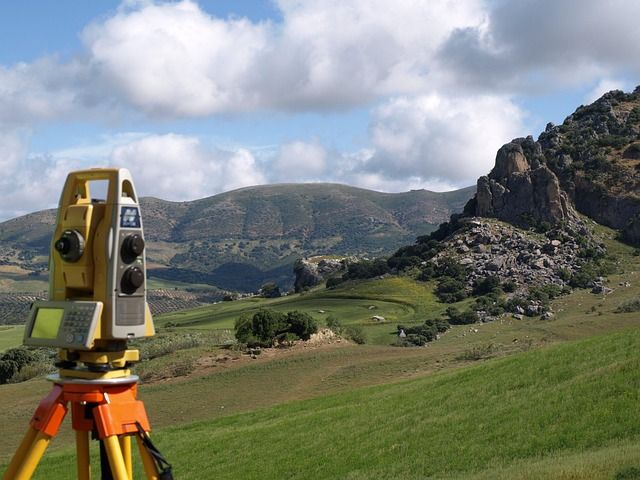
Robotic total stations

As you can see, technology has also transformed our sector, and we have embraced this evolution by extensively using the best tools to achieve faster and more cost-effective results. That’s why, in addition to traditional surveying services, we stay up to date by incorporating cutting-edge technologies.

What Types of Services Does a Surveying Company Offer?

A specialized surveying company must be equipped to offer high-quality services such as:

  • Topographic surveys of any area
  • Topographic leveling: geometric, trigonometric, physical, barometric, etc.
  • Aerial orthophotos (drone photogrammetry)
  • Tachymetry services using total stations for fast distance measurement
  • LIDAR services for densely forested areas
  • Hydrographic surveying
  • Earth volume calculation surveying

What Topographic Techniques Do We Use?

Among the specialized techniques we implement are:

  • Traverse surveying
  • Geometric leveling
  • Drone-based surveying
  • Drone photogrammetry
  • Topographic surveys
  • Geodesy services

With professionals specialized in each of these methods, we deliver accurate and comprehensive data that are essential for the planning and execution of projects of any size and complexity.

We invite you to contact us and join our satisfied clients who value the quality of our work, our punctuality, and our commitment. At Acero Estudio, we adapt to the specific needs of each project to guarantee precise and efficient results.